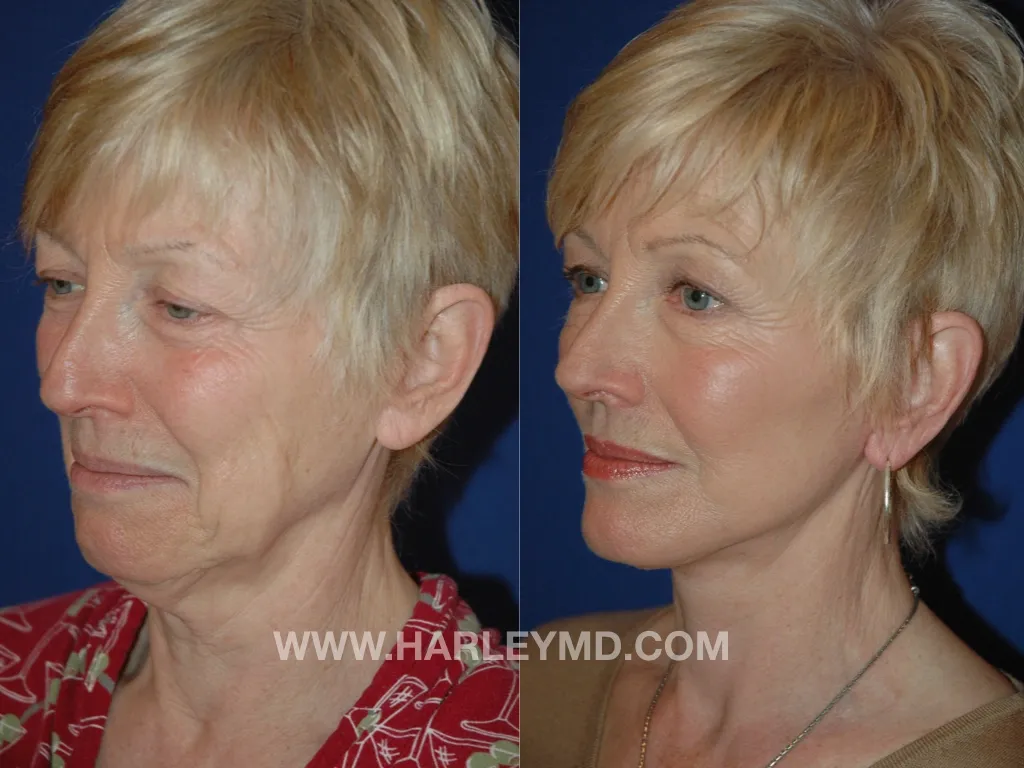
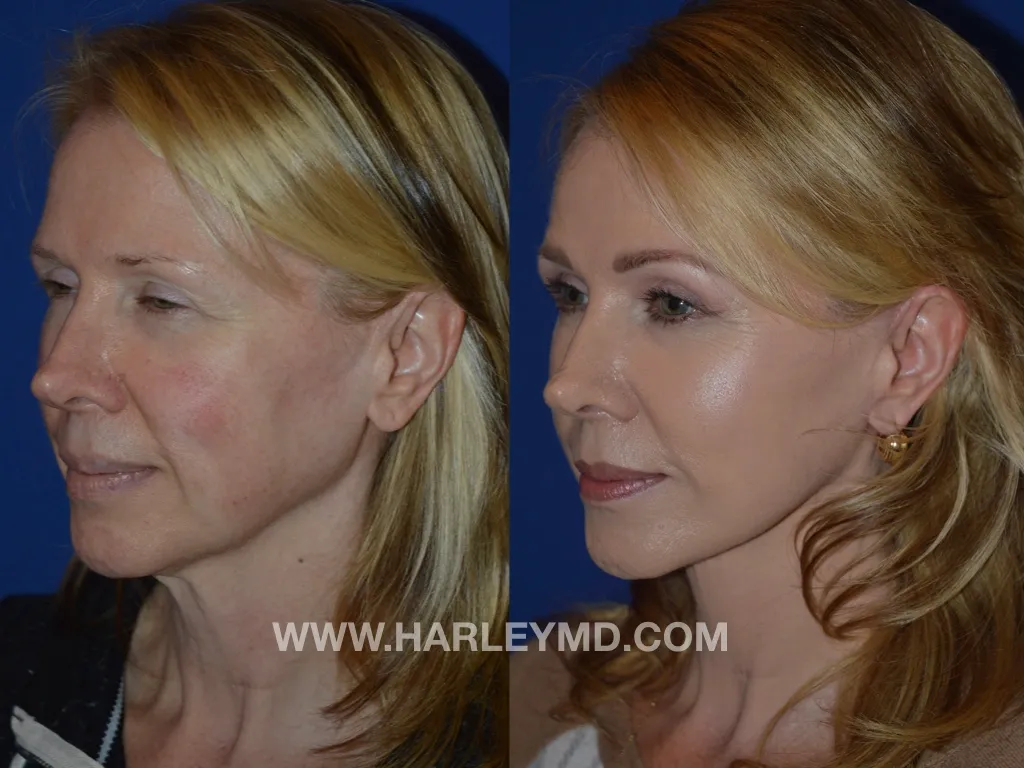
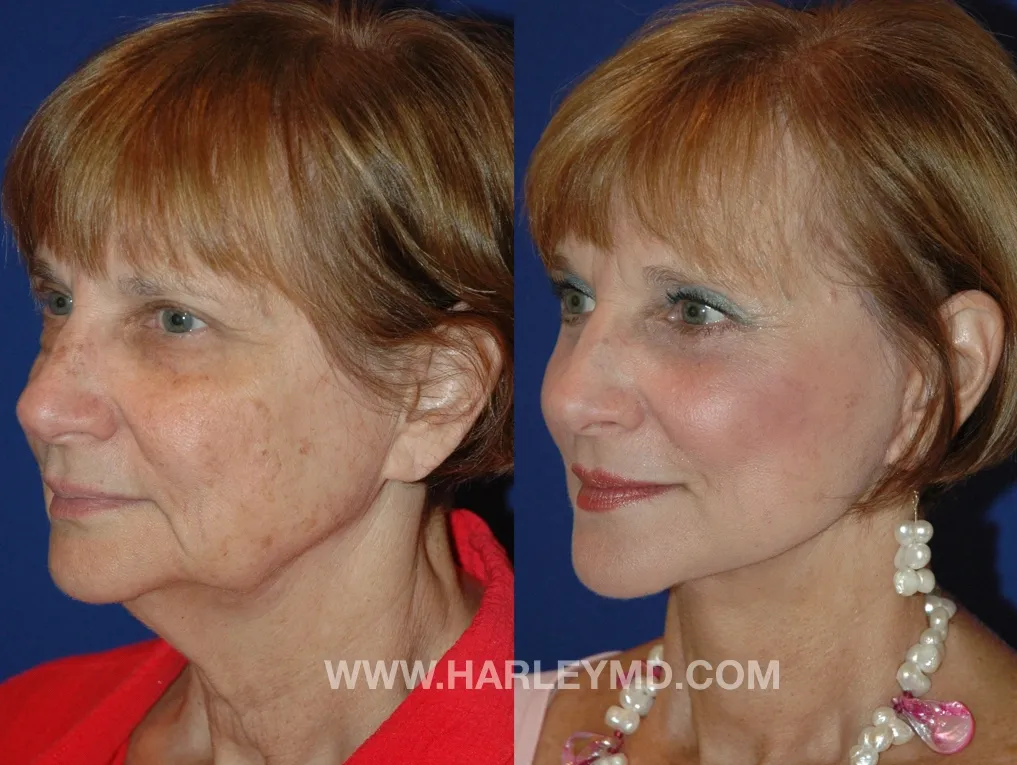
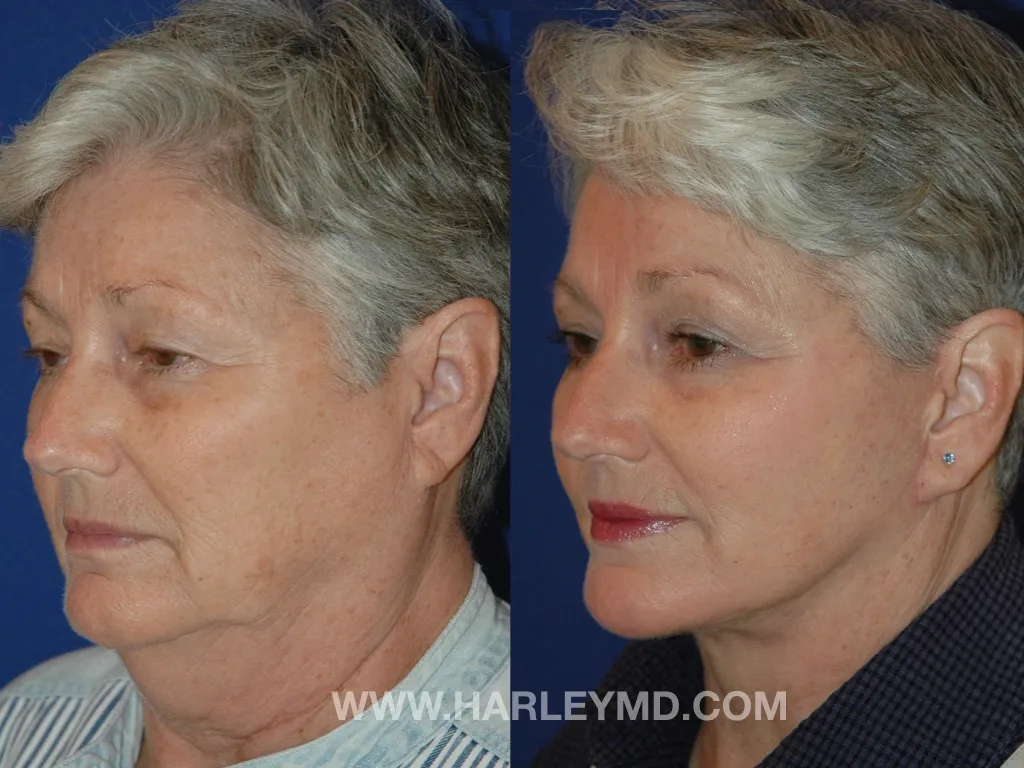
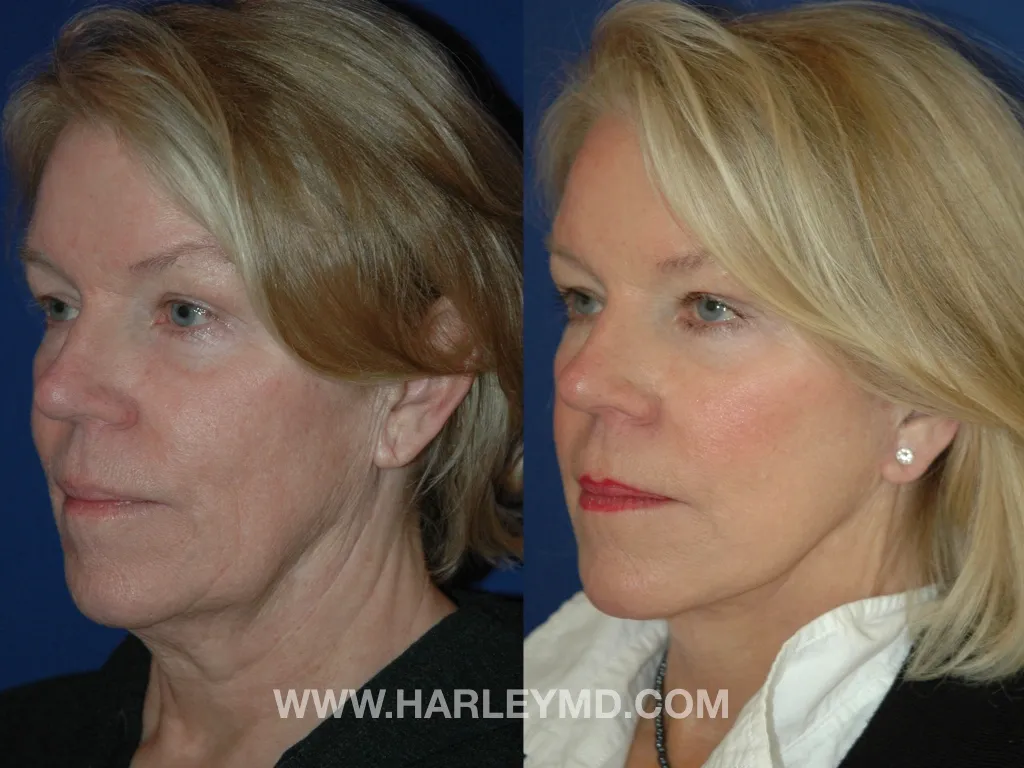
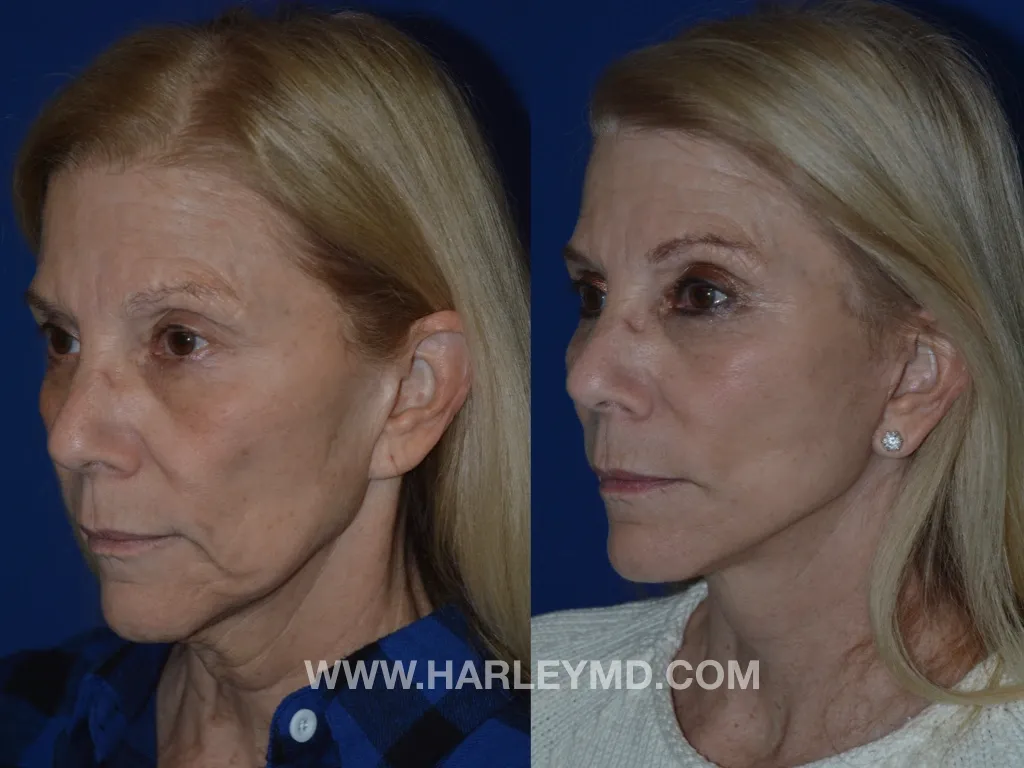
An early intervention facelift is a procedure that is performed on a younger patient, usually in her 40s or early 50s. Sometimes patients in these age groups pursue a mini facelift. However, a mini facelift is not well defined in the medical literature. Dr. Harley prefers the term “early intervention facelift.” What is generally sought when a patient seeks a “mini-facelift” is a shorter scar and less downtime. These may be possible in an early intervention facelift for patients in the Asheville, NC, and Greenville, SC, areas, depending on your own individual characteristics and Dr. Harley’s assessment following your consultation.
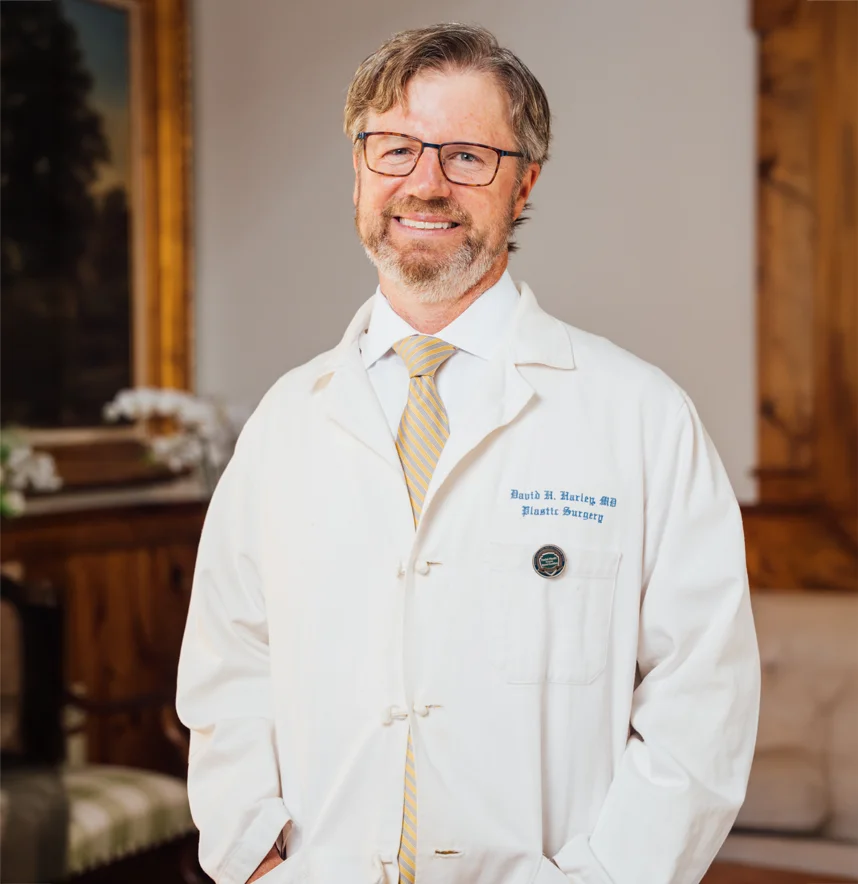
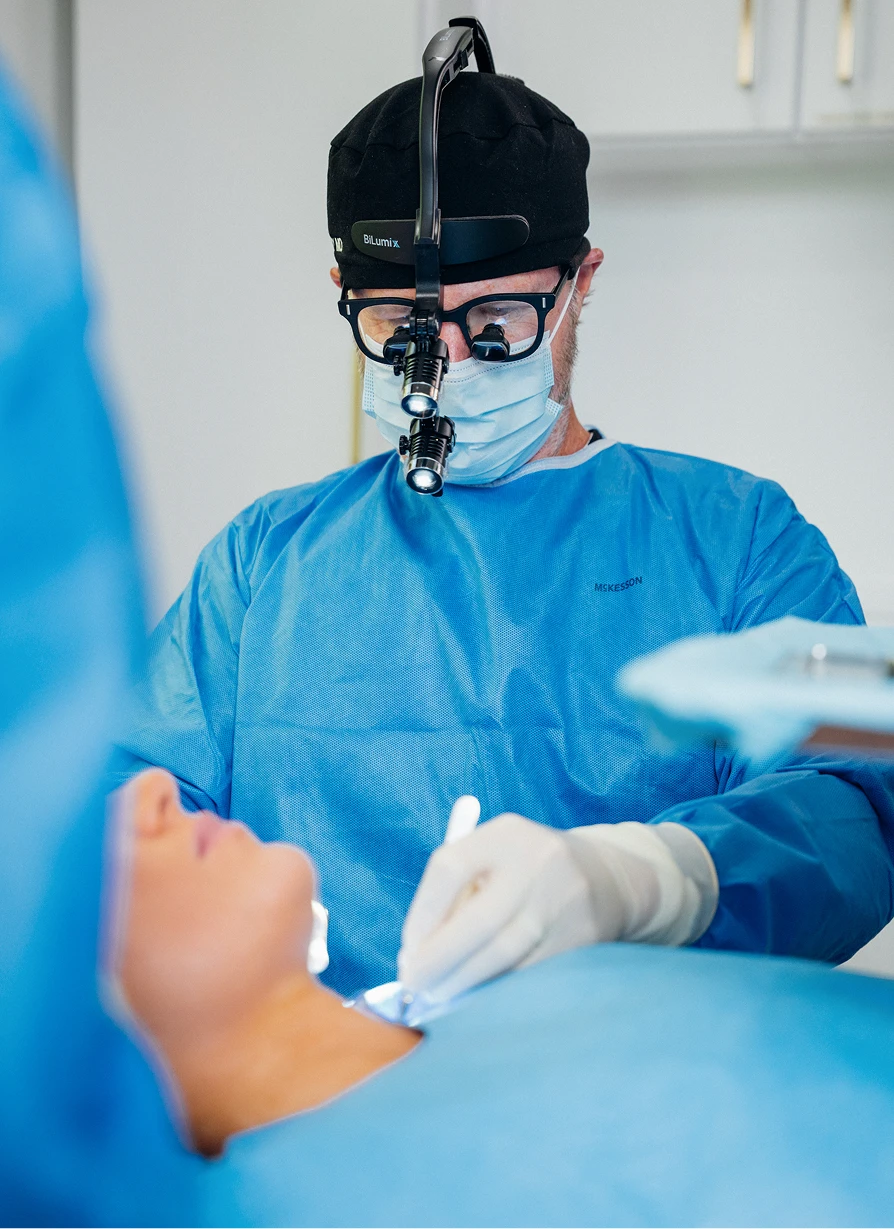
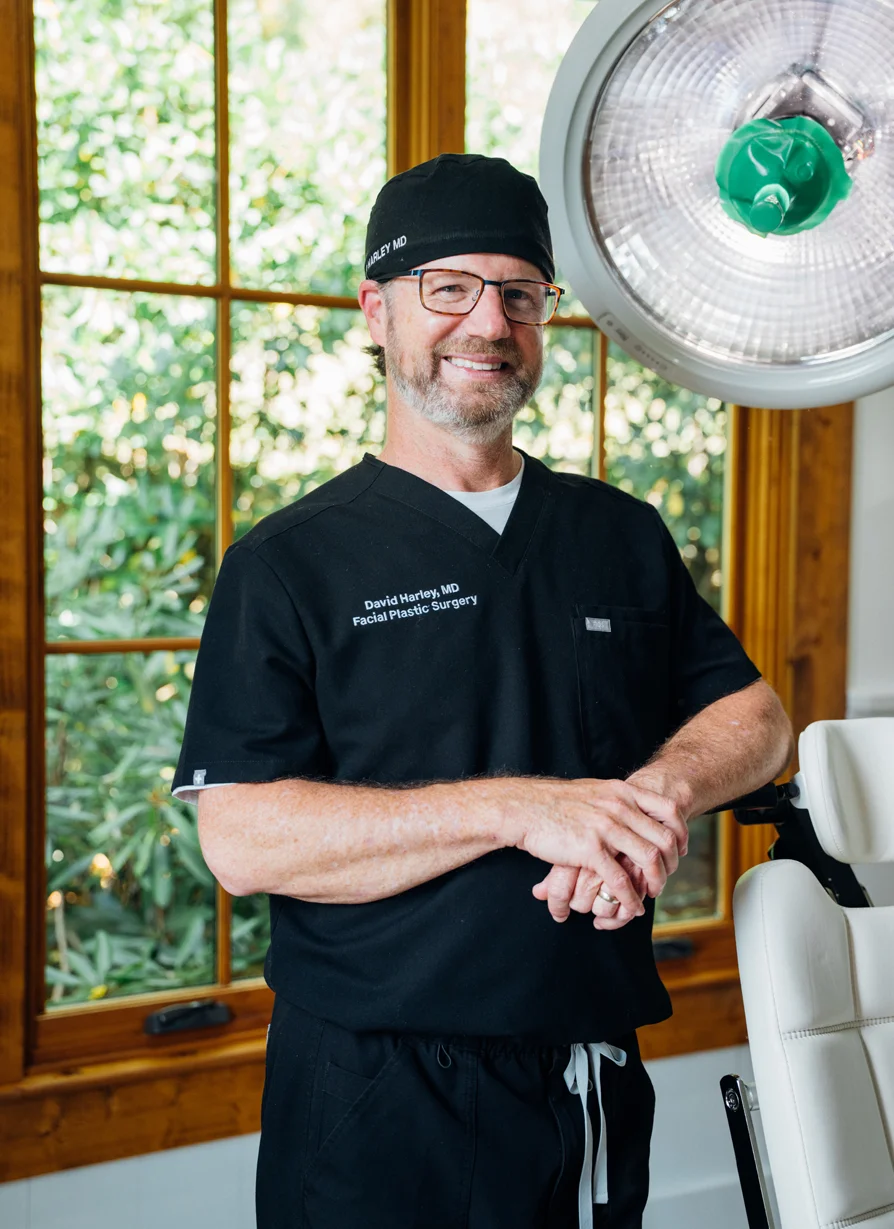
Dr. Harley is an experienced, highly skilled plastic surgeon who has dedicated his career exclusively to facial and neck procedures, ensuring nuanced, elegant outcomes. He performs facelift surgery under local anesthesia with oral sedation. This allows you to rest peacefully, free from pain and discomfort, while he rejuvenates your appearance and restores an inviting facial expression.
All facelifts performed by Dr. David Harley are deep-plane procedures. A deep plane facelift offers next-level rejuvenation with minimal trauma to the superficial skin. During surgery, Dr. Harley releases the deeper facial ligaments and repositions the muscle, tissue, and fat layers as a single unit. He does this in an extended fashion, lifting the tissues all the way to the central portion of the face so they are fully mobilized. This procedure is called an extended deep-plane facelift or a deep-plane extended facelift.
Many experienced facelift surgeons agree that the more the superficial connections are preserved, the less downtime and the more natural the overall result. Specifically, this means the connection of the skin to the subcutaneous fat and underlying SMAS. If these adhesions can be maintained, results can be just as powerful and provide better longevity and reduced downtime. The preservation facelift is still considered a deep-plane facelift and can also be performed in an extended fashion, as in the extended deep-plane facelift described above.
In some cases, patients have had a previous facelift and are now ready for a second facelift and or neck lift. Even if the previous facelift was a SMAS facelift or an extended SMAS facelift, and even if it was performed as a deep plane facelift, Dr. Harley can perform a subsequent procedure known as a secondary facelift or revision facelift. A secondary facelift is typically performed several years after the initial or most recent facelift. However, a revision facelift is typically performed after a shorter amount of time, usually a year or a few years after the previous facelift. If you have experienced complications after a primary facelift or are unhappy with your results in any way, Dr. Harley can perform a revision procedure to restore balance, comfort, and peace of mind.